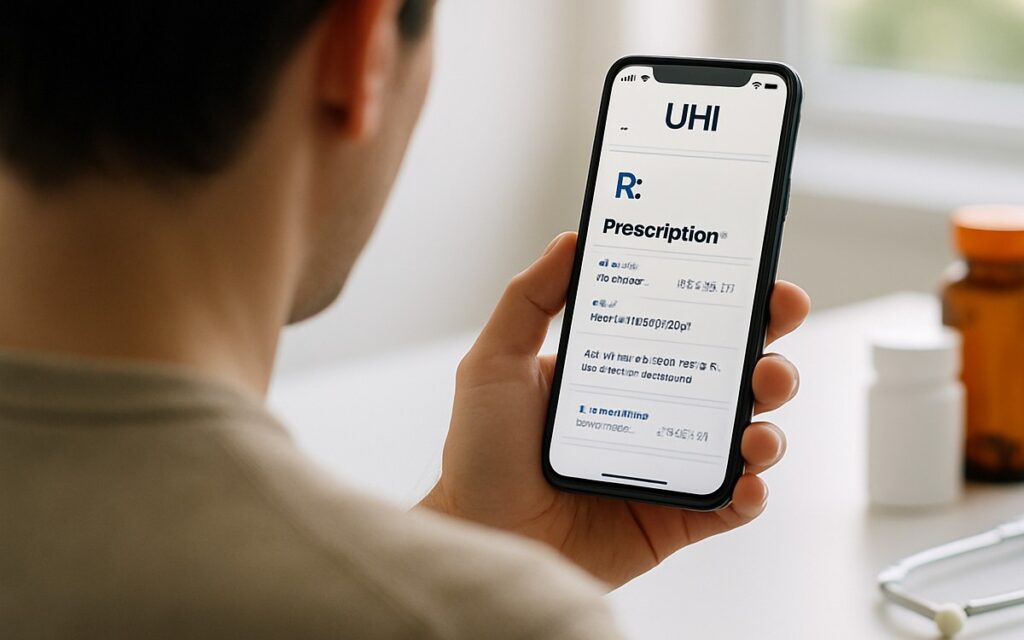
The Unified Health Interface (UHI) transforms how patients access medications by creating a seamless digital bridge between doctors, pharmacies, and health apps. Patients discover nearby pharmacies, upload prescriptions effortlessly, and receive doorstep delivery without multiple logins or calls. This open network cuts delays, reduces errors, and ensures prescriptions reach users quickly and securely. Health providers connect once to serve millions, making prescription fulfillment faster and more reliable than traditional methods.
What Is the Unified Health Interface?
Core Purpose of UHI
The Unified Health Interface serves as an open protocol that standardizes digital health transactions across platforms. It enables health apps, clinics, and pharmacies to communicate securely using common standards, much like payment networks link banks. Patients benefit from one consistent experience regardless of the app they choose, eliminating fragmented services.
Developers build on UHI without proprietary restrictions, fostering widespread adoption. Gateways act as neutral hubs, verifying identities and routing requests while ensuring privacy through consent-based data sharing. This architecture simplifies complex interactions into intuitive steps.
Key Components of the Network
UHI networks feature healthcare providers, pharmacies, patients, and gateway aggregators working together. Providers list services like consultations, while pharmacies display inventory and delivery options. Patients search, select, and transact through any compatible app, receiving real-time confirmations.
Consent managers handle data access, letting patients control who sees their records. FHIR standards ensure medical information flows accurately between systems, supporting prescriptions with full context like dosage and duration.
How UHI Streamlines Prescription Fulfillment
From Doctor to Pharmacy in Minutes
Doctors generate e-prescriptions within UHI apps, embedding all details like patient name, medication list, dosage, and validity. These prescriptions transmit instantly to chosen pharmacies via the network. Patients receive notifications when pharmacies accept orders, often with estimated delivery times.
This digital handoff replaces faxed papers or verbal relays, minimizing misreads and delays. Pharmacies verify prescriptions automatically against doctor credentials, dispensing only valid ones.
Real-Time Pharmacy Discovery
Patients open UHI-enabled apps to locate verified pharmacies by location, ratings, or availability. Filters show 24/7 options, home delivery zones, or generic alternatives. Selecting a pharmacy populates the prescription for instant upload, streamlining what once required phone searches.
Maps integrate seamlessly, highlighting distances and timings. Users compare prices across outlets, choosing based on cost, speed, or loyalty offers.
Step-by-Step Prescription Purchase Process
Step 1: Digital Prescription Generation
Consultations happen via telehealth or in-clinic UHI apps. Doctors review symptoms, history, and tests, then create prescriptions with precise instructions. Patients review and approve before transmission, ensuring accuracy.
Prescriptions carry digital signatures and timestamps, valid for standard periods like course duration or six months. Apps store them securely for reuse within limits.
Step 2: Uploading and Pharmacy Selection
Patients upload or select recent prescriptions from app history. UHI scans nearby pharmacies, displaying stock availability for each medication. One-tap selection adds items to cart, calculates totals, and shows delivery fees.
Smart suggestions flag lower-cost generics or substitutes, pending doctor approval if needed. Secure payment links activate, supporting cards, wallets, or cash on delivery.
Step 3: Verification and Dispensing
Pharmacies receive orders with full prescription context. Automated checks confirm validity, doctor registration, and quantities. Pharmacists pack medications, generate e-invoices, and dispatch via partnered logistics.
Patients track shipments live, receiving arrival alerts. Delivery personnel verify identity at doorsteps, handing over temperature-controlled packages when required.
Step 4: Post-Purchase Support
Apps log complete transactions, including invoices and delivery proofs. Patients rate experiences, helping networks improve. Refill reminders trigger weeks before depletion, linking back to doctors for renewals.
Support chatbots resolve queries instantly, escalating complex cases to providers or pharmacies.
Benefits for Patients
Convenience and Time Savings
Patients skip long queues and traffic, ordering from home or office. UHI handles peak demand without slowdowns, ensuring medications arrive within hours. Busy schedules no longer disrupt treatment adherence.
Multiple family members manage shared accounts, assigning permissions for elders or children. One platform serves all needs, from urban to remote areas.
Cost Transparency and Savings
Real-time pricing across pharmacies reveals deals and discounts. UHI flags insurance-eligible items, applying copays seamlessly. Generic recommendations lower bills without quality compromise.
Bulk purchase options emerge for chronic needs, with subscription models for monthly deliveries at fixed rates.
Enhanced Safety and Accuracy
Digital prescriptions eliminate handwriting errors, ensuring correct dosages reach patients. UHI verifies allergies against records before dispensing, preventing adverse reactions. Expiry alerts avoid outdated medication use.
Two-factor authentication secures every step, protecting sensitive health data from breaches.
Advantages for Pharmacies and Doctors
Simplified Operations for Pharmacies
Small pharmacies join UHI via simple app integration, gaining visibility to new customers. Automated inventory syncs prevent stockouts, while analytics forecast demand. Delivery partnerships expand reach without logistics overhead.
Unified dashboards track orders, payments, and returns centrally, cutting paperwork.
Streamlined Workflows for Doctors
Doctors connect once to multiple apps, serving diverse patients. UHI auto-populates patient histories, speeding consultations. Prescription tracking shows fulfillment status, closing feedback loops.
Integration with lab networks pulls test results directly, enhancing diagnosis precision.
Technical Foundations of UHI
Open APIs and Interoperability
UHI uses RESTful APIs with JSON payloads, ensuring compatibility across devices. OAuth secures access, while HL7 FHIR standardizes health data exchange. Developers onboard via sandboxes, testing live before launch.
Scalable cloud infrastructure handles millions of transactions daily, with 99.99% uptime.
Privacy and Security Measures
End-to-end encryption protects data in transit and at rest. Consent vaults log patient permissions granularly, like view-only or transact. Blockchain timestamps transactions immutably, aiding audits.
Regular penetration testing and compliance audits maintain trust. Data localizes storage, meeting regional standards.
Real-World Use Cases
Managing Chronic Conditions
Patients with ongoing needs set auto-refills, syncing with doctor calendars. UHI notifies before validity expires, booking virtual follow-ups seamlessly. Medication adherence improves through reminders and progress trackers.
Family caregivers monitor elders remotely, approving deliveries instantly.
Emergency Prescription Needs
Urgent cases route to nearest 24/7 pharmacies with priority flags. UHI geolocates users accurately, dispatching within 30 minutes. Video consults generate spot prescriptions, bridging gaps.
Travelers access networks nationwide, maintaining continuity away from home bases.
Pediatric and Family Care
Parents upload pediatric prescriptions, selecting child-friendly pharmacies. UHI suggests syrups or chewables in stock, with clear dosing visuals. Multi-profile accounts separate family medications logically.