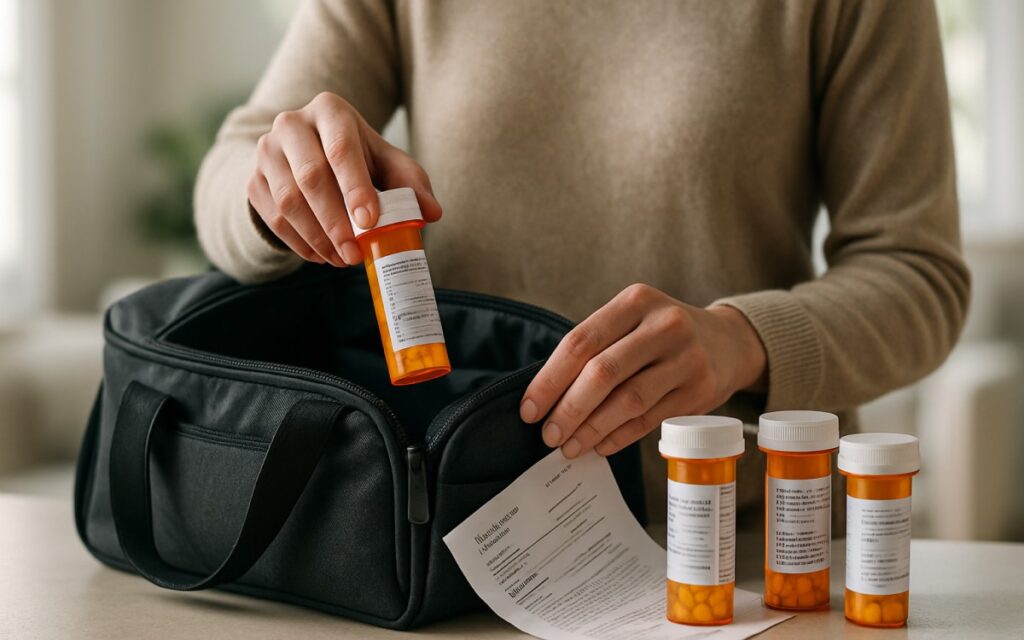
Travelling with prescription medicines adds a layer of responsibility that most people underestimate until something goes wrong. A missed dose, a confiscated medication at customs, or a lost bag can quickly turn a manageable health condition into a travel emergency. Being prepared isn’t about being overly cautious — it’s about making sure the trip doesn’t come at the cost of your health. Knowing what to carry, how to carry it, and what the rules are at your destination makes all the difference.
Get Organised Before the Trip
Preparation done well before departure is what prevents most travel-related medication problems.
Carry the Original Packaging
Every prescription medication should be carried in its original packaging, with the pharmacist’s label intact. This label carries the patient’s name, the prescribing doctor’s details, the medication name, and the dosage instructions. It’s the most straightforward piece of documentation available, and it’s often the first thing a customs officer or airport security official will look at.
Pack More Than Enough
Carrying slightly more medication than the trip requires is a standard precaution. Delays happen, itineraries change, and pharmacies in unfamiliar locations may not stock what’s needed or may carry it under a different brand name. A buffer of a few extra days’ supply is a practical safeguard, not an overreaction.
Split the Supply
Where possible, the medication supply should be divided between carry-on and checked luggage. If one bag is delayed or lost, the other still has enough to manage until a replacement can be sourced. This applies particularly to medications that cannot be safely interrupted without medical supervision.
Keep Documentation Ready
Having the right paperwork can be the difference between a smooth border crossing and an unnecessary delay.
A Letter From Your Doctor
A signed letter from the prescribing doctor is one of the most useful documents a traveller can carry. It should state the patient’s name, the condition being managed, the name of the medication, the dosage, and the fact that it has been legally prescribed. For controlled or sensitive medications, this letter is not optional.
Translated Documentation for International Travel
Where travel involves countries with a different official language, having the key details of the prescription translated in advance is a sensible step. It removes ambiguity at customs and helps local healthcare providers if medical attention becomes necessary during the trip. Some embassies and consulates can advise on what documentation is typically expected at their country’s borders.
Keep Digital Copies
Scanned copies of the prescription, doctor’s letter, and any supporting documentation should be stored securely in an accessible digital format. A cloud-based folder or a secure email to oneself ensures that the documents are retrievable even if the physical copies are lost or damaged.
Know the Destination’s Rules
What is legally prescribed in one country is not automatically permitted in another.
Research Before You Arrive
Some medications that are routinely prescribed in one country are classified as controlled substances or are outright prohibited in others. Carrying them across certain borders without prior authorisation can result in confiscation, fines, or more serious legal consequences. Checking the regulations of every country on the itinerary is a necessary step, not an optional one.
Quantity Restrictions
Even where medication is permitted, the quantity allowed across a border may be limited. Many countries allow travellers to carry only a specified number of days’ supply without additional documentation. Carrying more than the permitted amount, without the relevant paperwork, can create complications at customs regardless of how legitimate the prescription is.
Controlled Medications Require Extra Steps
For medications classified as controlled substances, prior notification to the relevant authority at the destination country may be required. Some countries issue import certificates or require advance permits for travellers carrying these medications. Researching this well ahead of departure gives enough time to complete any required processes.
Store Medication Correctly
How medication is stored during travel is just as important as how it is documented.
Temperature Sensitivity
A number of prescription medications are sensitive to temperature and must be kept within a specific range to remain effective. Checked luggage in the hold of an aircraft is not temperature controlled in the same way as the cabin, which is one of several reasons why temperature-sensitive medications should always be carried on board. Insulated pouches and travel cooling cases are widely available and worth the investment.
Avoiding Direct Sunlight and Humidity
Certain medications degrade when exposed to direct sunlight or high humidity. Keeping them in a cool, dry, shaded part of the bag rather than a side pocket that sits in the sun is a small habit with a meaningful impact on the medication’s efficacy over the course of a long trip.
Liquid Medications and Security Screening
Liquid medications are exempt from the standard liquid restrictions at most international airports, provided they are accompanied by the relevant prescription documentation. They should be declared separately at security, carried accessibly, and not packed in a way that makes them difficult to retrieve quickly.
Plan Dosage Based on the Time Zone
Long-haul travel across multiple time zones introduces a timing challenge that is easy to overlook during the planning stage.
Adjusting Gradually
For medications that need to be taken at specific intervals, crossing multiple time zones can disrupt the schedule. Consulting the prescribing doctor before departure about how to adjust the timing is recommended, particularly for medications where the interval between doses has clinical significance.
Using Reminders
Setting alarms or reminders on a phone, adjusted to both the home time zone and the destination time zone during transition, is a practical way to maintain consistency. Pill organisers with time markings can also help when managing multiple medications across a long journey.
Have a Medication Backup Ready
Even with careful preparation, situations can arise where medication is no longer available.
Contact a Local Doctor Early
If a supply is running low or has been lost, seeking medical advice at the destination sooner rather than later is always the better approach. Waiting until the supply has completely run out reduces the options available and increases the risk of a gap in treatment.
Know the Generic Name
Brand names vary across countries, and a pharmacist abroad may not recognise a medication by the name on the packaging. Knowing the generic name of every medication being carried makes it considerably easier to communicate with a local healthcare provider or pharmacist and locate an equivalent where one exists.